Bad breath is the symptom that starts most dental conversations in Chester, and it sends owners in two wrong directions: ignoring it for years, or buying a product that promises to scrape teeth clean without a vet visit. The useful path runs through one distinction. Plaque is the soft film that forms on teeth daily and brushes off. Tartar is plaque that has mineralized into a hard crust, and once it exists, no brush, chew, or wipe at home will remove it.
Work through the steps below in order. Each one starts with what you see, points to the likely cause, and ends with either a home fix or the right professional.
From symptom to fix, in order
- Lift the lip and look. Healthy gums are pink and the teeth mostly white. Note where any yellow or brown buildup sits; it usually starts on the back upper teeth and along the gumline.
- Run a fingernail along a tooth. Soft, filmy material is plaque, and brushing can remove it. A hard, crusty ridge that your nail cannot dent is tartar, and it is already past home care.
- Check the gumline. A thin red line where tooth meets gum is early gum inflammation, which brushing genuinely can reverse. Swollen, bleeding, or receding gums mean the process has advanced.
- Start a brushing routine on the plaque. Use a dog toothbrush or finger brush and dog toothpaste (never human toothpaste, which may contain ingredients dogs should not swallow). Begin with a few teeth, a few seconds, and praise, building over a couple of weeks to the whole mouth.
- Brush the outside surfaces first. Dogs tolerate work on the cheek side of the teeth best, and that is where tartar builds fastest anyway. Small circles at the gumline do the work; a full session takes about a minute once the dog is used to it.
- Read the remaining signs honestly. Dropping food, chewing on one side, pawing at the mouth, loose teeth, or breath that suddenly worsens are pain and disease signals, not brushing problems. Those go straight to the veterinarian.
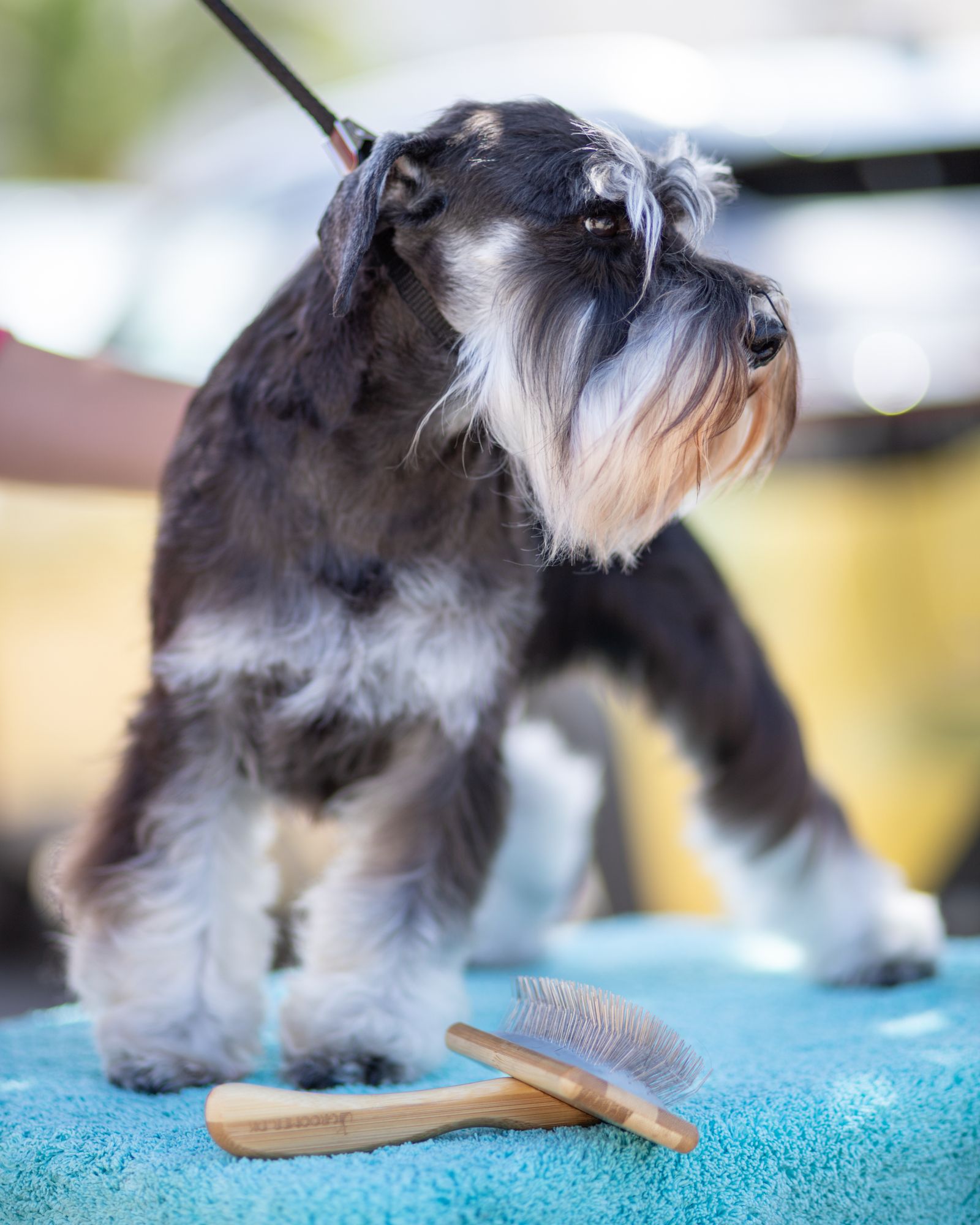
What groomers can and cannot do
A grooming appointment can include a tooth-brushing with dog toothpaste and a look in the mouth, and that look has real value: groomers see your dog's teeth regularly and can flag tartar, redness, or a broken tooth between vet visits. What groomers cannot do is scale tartar off teeth or clean below the gumline. Dental scaling is veterinary work because doing it properly requires anesthesia: the important cleaning happens under the gumline, on a still patient, and an awake dog cannot be scaled thoroughly or safely.
Be wary of anesthesia-free dental services that scrape the visible crown. The tooth looks whiter afterward, which is satisfying, but the tartar and bacteria under the gumline, the part that actually drives gum disease and tooth loss, are untouched. A polished-looking tooth with disease underneath is worse than an honest diagnosis.
Making brushing stick
Daily is the ideal because plaque hardens in roughly one to two days, but brushing three or four times a week still meaningfully slows tartar. Timing helps: brush when the dog is settled, not playful. Keep sessions short, let the dog lick the toothpaste (it is flavored for a reason), and do not fight to open the mouth wide; lifting the lip is enough for the outer surfaces where it matters most. Puppies started early, with gentle lip lifting and a tasty paste, usually accept brushing for life with no drama.
At home in Chester, the pattern to hold onto is simple: brush the soft stuff off before it hardens, let groomers like Beth's Canine Design be your regular second set of eyes, and treat tartar, gum bleeding, and mouth pain as the veterinarian's job. Teeth are one area of dog care where a small daily habit prevents the largest bills and the most pain later, in general terms on both counts.
Common questions
How often do I really need to brush my dog's teeth?
Daily is best because plaque mineralizes into tartar within a day or two. Brushing several times a week still helps a great deal if daily is not realistic.
Can a groomer remove the brown crust on my dog's teeth?
No. That crust is tartar, and removing it, especially below the gumline, requires veterinary scaling under anesthesia. A groomer can brush teeth and alert you to what they see.
Are dental chews a substitute for brushing?
They help scrape some plaque and are better than nothing, but they reach only the teeth doing the chewing. Brushing remains the most reliable home care.
Photos in this guide are representative stock images.
← All guides from Beth's Canine Design← Back to Beth's Canine Design