Somewhere around the time a dog's muzzle grays, owners in Chester start quietly skipping grooming. The dog seems fragile, the appointments seem long, and it feels kinder to let it be. The intention is good and the result usually is not: old dogs grow the same mats, nails, and dirty coats as young ones, and they tolerate the resulting problems worse. What senior dogs need is not less grooming but different grooming, and sorting the common claims about it helps.
Below are the claims groomers hear most, sorted into what holds up and what depends.
Myth versus fact
| Claim | Verdict | Why |
|---|---|---|
| Senior dogs should be groomed less often | False | Aging skin gets thinner and drier, nails keep growing, and coats mat the same as ever. Regular, shorter appointments suit seniors better than rare, long ones. |
| A senior dog must stand for the whole groom | False | Dogs can be groomed sitting or lying for much of the work, with standing broken into short stretches. A good groomer works around the dog's comfortable positions. |
| Shaving an old dog short is always the kindest choice | It depends | A shorter, simpler clip reduces session time and home upkeep, which often is kindest. But very short clips expose thin senior skin to sun and scrapes, so length is a judgment call, not a rule. |
| Lumps should keep a dog away from the groomer | False | Old dogs commonly have benign lumps and skin tags. The groomer needs to know where they are so clippers and brushes avoid them; a vet should check any new or changing lump. |
| If the dog gets stressed, sedating it at home is fine | False | Sedation for grooming is a veterinary decision with real risks in older dogs. Exhaust the gentler options first: shorter visits, quieter times, breaks, and a familiar groomer. |
| Grooming is a good health check for seniors | True | Hands-on grooming regularly finds new lumps, sore spots, skin changes, and weight shifts early, when they are easiest for a vet to address. |
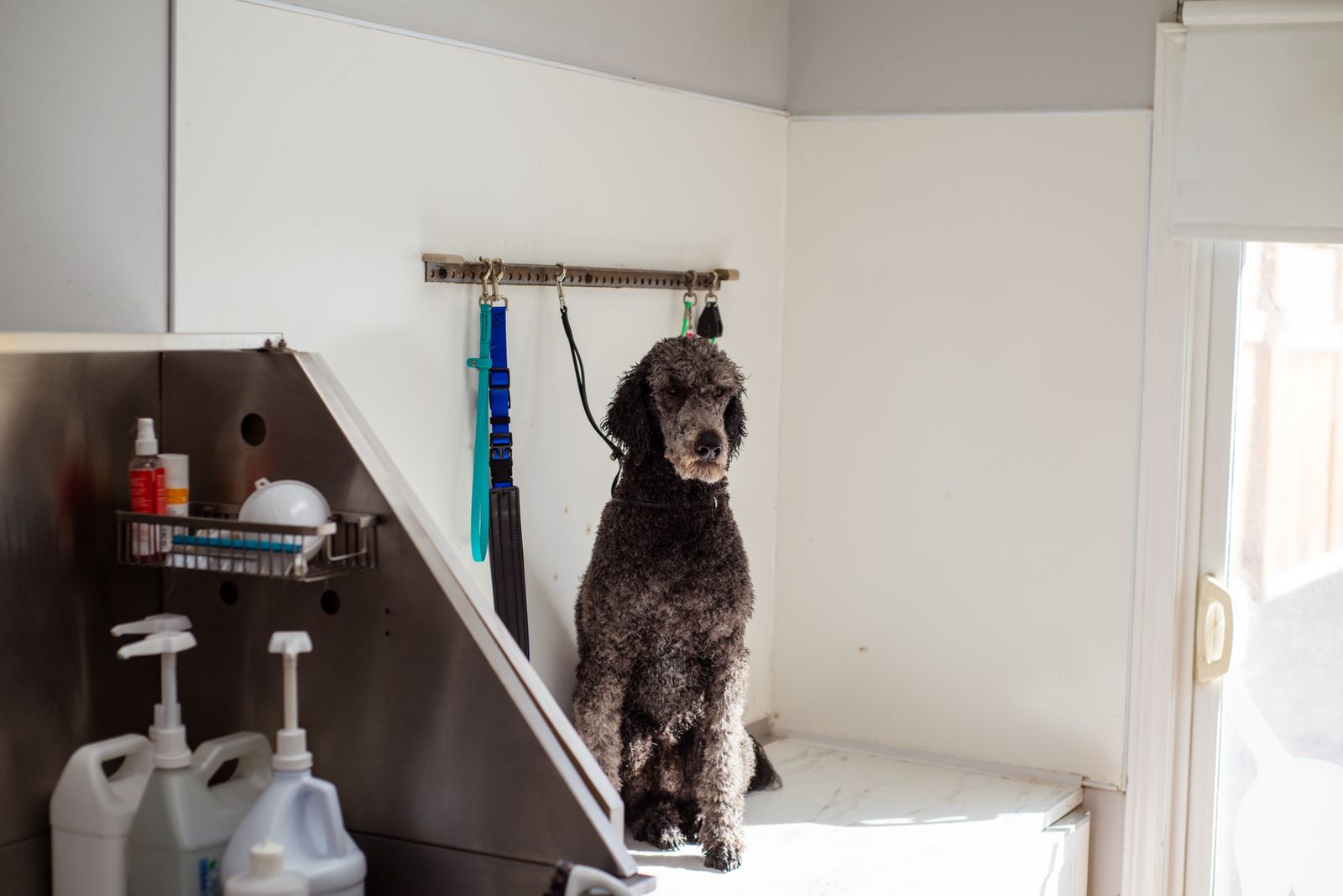
What comfort-first actually looks like
A comfort-first appointment is shorter and simpler by design. The fancy finish matters less than the essentials done kindly: bath, a manageable clip, nails trimmed, ears and sanitary areas cleaned. The session may be split, with a bath one visit and the clip finished another, or built with rest breaks where the dog lies down off the table. Arthritis is the main planning fact: stiff hips and shoulders make standing on a table tiring and make slippery tub floors frightening, so non-slip surfaces and support while lifting are not luxuries for an old dog.
At home, the same logic applies in miniature. Keep nails short so arthritic toes are not pushed out of line, run a hand over the whole dog weekly to find lumps and sore spots while they are small, and keep a gentle brush moving through the coat so the salon visits stay short. Tell the groomer what has changed since last time: a new limp, a new lump, a new medication. That thirty-second report shapes the whole appointment.
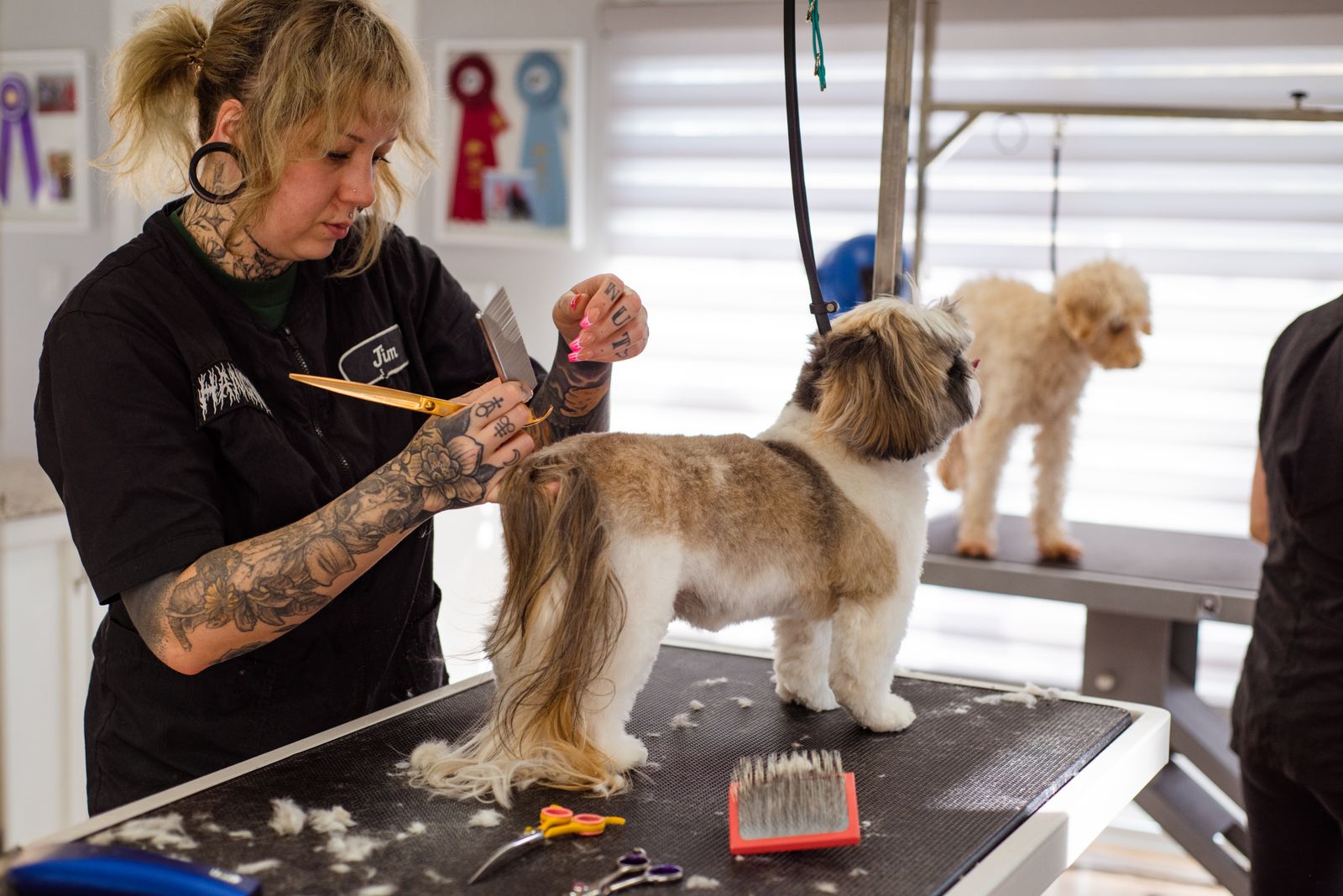
In Chester, the goal is a dog that stays close to home base, uses a familiar salon like Beth's Canine Design, sees the same hands, and finishes before it is tired rather than after. Senior grooming done that way is not a scaled-down version of normal grooming. It is its own discipline, and the dogs, who arrive suspicious and leave comfortable, seem to know the difference.
Changes to make at home, not just at the salon
Comfort-first grooming extends past the appointment. Raised food and water bowls spare a stiff neck, a rug runner across a hard floor gives old legs purchase, and a ramp or a step at the car removes the jump that hurts most. Keep the dog's world on one level where you can, and keep grooming supplies where the dog is already comfortable rather than hauling the dog to a utility room. Groomers notice the difference immediately: a senior that is not already tired and sore from getting to the appointment has far more patience for the appointment itself, and the session can stay focused on care instead of recovery.
Common questions
How often should a senior dog be groomed?
On roughly the same schedule as before, but with shorter, simpler appointments. Letting the interval stretch usually creates mats and long nails that make the next visit harder.
My old dog hates the dryer now. What can be done?
Ask for a towel dry, a lower dryer setting, or a shorter coat that dries faster. Many senior dogs get more sound-sensitive with age, and groomers can adjust.
Should I mention my dog's arthritis to the groomer?
Yes, always, along with where it is worst. It changes how the dog is lifted, positioned, and paced through the appointment.
Photos in this guide are representative stock images.
← All guides from Beth's Canine Design← Back to Beth's Canine Design